Showing posts with label 2010 release. Show all posts

Monday, March 12, 2012

95) Pornography: A Thriller (2009)

95) Pornography: A Thriller (2009) Dir: David Kittredge Date Released: April 16, 2010 Date Seen: March 10, 2012 Rating: 3.75/5

Normally, the idea of watching movies that were made by friends scares me. It's an irrational fear, really, since I'm normally afraid that I won't like what I see and that I'll consequently offend my friends by being, well, less than enthused. Thankfully, my real friends, the ones that actually value my opinion, all make good movies. Messy, yes, but they're definitely not, to use an image from Pornography: A Thriller, crossword puzzle pictures. They're often full of radical ideas that are sometimes intentionally alienating. Being intentionally alienating is not a merit unto itself, mind you. But the movies I'm thinking of are also not facile or empty-headed, either.

So as a word of introduction rather than disclaimer, let me start by saying that I'm proud to know David Kittredge. He wrote and directed Pornography: A Thriller and I feel it's a very strong film, warts and all. I disagree with the L Magazine's Henry Stewart, who was generally positive about the film in his review but also wrote that Kittredge's dialogue is "pretentious." Pornography's dialogue is blunt and it is sometimes groan-worthy. But that's part of its creaky charm. Kittredge doesn't want the viewer to feel totally comfortable, even though his film does evoke several older horror films, which may put viewers somewhat at ease. When I watched Pornography, I saw: VideodromeLost HighwayMulholland Drive, Kaufman's Invasion of the Bodysnatchers and The Texas Chain Saw Massacre, too. I think viewers' ability to make such free-associative connections is, furthermore, the film's point: movies and photographs are not, as one character points out during the first of Pornography's three inter-connected vignettes, strictly the past nor are they just imaginary. They "exist," as this naif innocently denies.

This opening segment of Pornography will later be repositioned as the most naive portion of the film. The beginning of any character's story is, after all, the part of their stories where they lay out their incorrect assumptions, the ones that will be challenged as their stories progress. This didactic conceit becomes abundantly clear during the film's third segment, when Matt Stevens (Pete Scherer), a semi-established gay porn star, tries his hand at screen-writing and winds up accidentally channeling the life story of Mark Anton (Jared Grey), a porn star from back in the early '90s (How weird it is to think of the '90s as the past!). Anton's the lead character of Pornography's introductory segment. Stevens, when telling a colleague about his script about Anton's life, explicitly says that Anton is introduced to us as having a naive perspective. Or, to put it another way, Anton is still in denial since he spends most of the film's first vignette trying to impress his ex-agent that he's now too cynical to be wrangled back into show business again.

But Anton is fundamentally naive. After all, he still believes in the organizing power of crossword puzzles. At a coffee bar, Anton bumps into a boy that he takes a college-level photography course with. The stranger, who gracelessly gives Anton the opportunity to declaim that he likes the neatness of crossword puzzles, additionally tells us what he likes about photography: it's imaginary because it's not the present and hence is not existence as we now know it.

The underlying assumption behind this statement, which thankfully remains the subtext of Pornography, is that this boy is, just like Anton, wrong. The past is just as valid as the present. The tape/DVD/VOD/avi file/streaming video you watch is affecting you even when you're not watching it. So when Stevens later asks (no one in particular) when does something we watch become real to us, the answer should be: the simultaneous now that messily conflates the present act of watching, the past of what you're looking at and the future of reflecting on a film after you've watched it.

That's what's squirming underneath my friend David's movie. So in spite of some chintzy performances and blunt dialogue, I can't help but really admire Pornography. It's got a sense of humor that I really appreciate, like in one scene where three guys are having a gangbang on a couch. And it looks like it's just a video recording when in fact the three guys in question are actually fucking opposite the television monitor we first see them screwing on. I don't think you can, in good conscience, write such a movie off. Because for every scene where Pornography looks too square and self-serious, there's another scene or two that points to a slippery, De Palma-style sense of humor. And because I know David and his love of De Palma movies, I know that that's probably not unintentional. I can confidently say that many of the things I responded negatively to in Pornography are meant to be alienating and hard to swallow. But they're the building blocks for something really interesting, namely a thesis as heady as, 'Passive spectatorship is an elaborate form of denial.' That should be Pornography's tagline, actually.

For example, during the film's middle segment, where aspiring writer Michael Castigan (Matthew Montgomery) talks to his boyfriend about why he's writing a book about the history of pornography, you start from the notion that Michael is also naive and in denial. He refuses to acknowledge that his interest in pornography is founded in personal interest. It's not just a cultural history and he's not just a disinterested historian: he likes what he's looking at. Which is why one shadowy character, dressed up in a hokey domino mask, forces Castigan to admit that, yes, he does likes to watch (Where's Chance the gardner when you really need him?!). Even Stevens, who is presumably the most self-aware character of the film's three protagonists, is naive enough to not immediately realize that the screenplay that he's writing, the one that is actually literally writing itself, is coming from outside of him. Eventually, Castigan comes to terms with the idea that participating in a porn (ie: acting in it) is just as much an act of active exhibition as it is a kind of passive reception of projected assumptions and desires.

What I'm trying to say is: I'm very glad I gave Pornography a chance. I'll be experiencing it for some time to come, I think....

Wednesday, March 7, 2012

85) A Woman, a Gun and a Noodle Shop (2009)

85) A Woman, a Gun and a Noodle Shop (2009) Dir: Yimou Zhang Date Released: September 3, 2010 Date Seen: March 4, 2012 Rating: 3.75/5

Why wasn't there more of a fuss about this one when it came out? There are obviously a number of things about this movie that are directly lifted from Blood Simple, though exactly to what extent I hope to see for myself when I rewatch the Coen brothers' stellar debut.* For instance, I can't help but be irked by the Noodle Shop screenwriters' direct lift of Blood Simple's unforgettable hand-through-the-wall bit.

But A Woman, a Gun and a Noodle Shop is also very much its own thing. It's a bit more uptight and also a bit more surreal than Blood Simple (though perhaps it's just surreal in its own way). The virtually dialogue-free scenes and the weird camera tricks, mostly using negative image filters, that Zhang had his DP use here are put to great use in the film's unique panoramic desert scenes. So yeah, the combination of flamboyant costume and surreal setting did a lot to offset the implicitly square and highly moral character of Zhang's update. It's a curious experiment, one comprised of weird disproportionate parts. But I liked it, mostly. Not really sure what to make of it though...One thing I can say for sure: I don't think I'll be able to soon forget that one shot of the back of the then stone-dead cuckold's head.

*Let's ignore Crimewave, please and thank you.

Wednesday, February 15, 2012

25) Love in Space (2011) and 26) Aftershock (2010)

25) Love in Space (2011) Dir: Tony Chan and Wing Shiya Date Released: September 9, 2011 Date Seen: January 16, 2012 Rating: 3/5

26) Aftershock (2010) Dir: Xiaogang Feng Date Released: October 29, 2010 Date Seen: January January 18, 2012 Rating: 3.25/5

Some of the better China Lion titles I've seen, certainly. See my think piece for Press Play.

Wednesday, July 13, 2011

3) Little Fockers (2010)

3) Little Fockers (2010) Dir: Paul Weitz Date Released: December 2010 Date Seen: January 6, 2011 Rating: 0.5/5

Note: I wrote this piece as part of a deal I made with my friend Tony Oop (not his last name). In exchange for $40, I wrote an overwhelmingly positive Little Fockers review. I got a kick out of writing this piece because it gave me the chance to poke fun of the image people seem to have of me as Armond Jr. or something. It ain't me, babe. The piece is called: Fock to the Future: On the Evolution of Character in 'Little Fockers'


Most franchises don't need to be trilogies. It's sad but true: most of the time, you don't need to see characters do the same things they did in one film in a second film, let alone a third one. I say this after having seen Little Fockers, the best third entry in an American comedy series you're likely to see. That's not hyperbole, folks: this movie is good (perhaps too good...) and totally essential. It's like the way the Alien franchise had to be a franchise for its thematic progression to finally pay off. Ben Stiller is basically a working class man's version of Ripley, a hero whose monster is very real and impossible to placate: father-in-law from hell Jack Byrnes (Robert Deniro).

Universal Studios displayed an incredible level of commitment to Jay Roach's original characters by deciding to stick it out with Greg and totally flesh out his world totally. First we meet his fiance's parents, seemingly the most terrifying meeting of his life, in Meet the Parents. Then his parents have to meet her parents in Meet the Fockers. Both of these events are landmarks in his life but what comes after their conclusion? Life, that's all, or to be more specific: the continuity of the family's future in the form of children. With warmth and wisdom and intelligence--and a little welcome potty humor for the folks at home that like to enjoy their movies--Little Fockers is a generous and very funny bookend and a fitting conclusion to a truly great treatise on modern families in America.

In Little Fockers, Greg has a world of responsibility put on him and it's all related in terms of hyper-real archetypes that should be painfully familiar to any viewer. Greg is faced with every family man's responsibility, all at once. He has to make sure his twins' birthday party goes off without a hitch, weigh the moral implications of selling a product he does not endorse vs. the much-needed money it could provide his family, avoid temptation, fend off Kevin (Owen Wilson), the other man in his wife's life, fend off the wiles of a young, nubile Jezebel named Andi Garcia (Jessica Alba) and then deal with Jack.

Jack embodies any number of Oedipal fears that screenwriter  John Hamburg and Larry Stuckey were smart enough to finesse using a lot of goofy, genial humor that often takes surreal and daring turns, as in the ball pit fight at the end. Jack is transformed into the shark from Jaws in this scene, a brilliant literal iteration of our understanding of the father-in-law as monster image that runs throughout the movie. Jack must control everything, even who will have control over his family after he's gone. That too is expressed shrewdly in another take on classic Hollywood cinema: to be the man Jack wants him to be, Greg must become the Godfocker. He fears he can't do it, of course, and transfers that performance anxiety back onto Jack during a painfully funny scene where he stabs Jack's penis with a syringe full of adrenaline. If you're too prudish to laugh at that joke, I suggest you stop reading now because I've probably already lost you. Who is the joke on if we can't laugh long and hard at our own little foibles? A constipated Focker like Greg.

And boy, can I take a moment to praise some of the other great libidinal twists Greg's neuroses take in Little Fockers? Because, let's fact it: only lazy critics will see this film and see a film series that underestimates its audience's intelligence. Ha! In reality, the filmmakers behind Little Fockers give their audience enough credit to laugh at something as knotty as the perpetual male fear of being emasculated by a temptress like Alba's Andi. And that's wonderfully expressed in the scene where she tries to get Greg drunk and then takes performance enhancement pills. We never see her erection but we don't need to to get the joke: Greg doesn't want to be taken advantage of. By the time she later dredges herself up out of the pit in Greg's new backyard, covered in dirt and eager to see Greg's father's flamenco moves, she has been soundly put back in her place. It's a macho fear expressed and neutralized in ways that Judd Apatow could only dream of expressing so well!

And the actors' comic timing--so masterful. The shouting match between Harvey Keitel and Deniro was especially impressive, the former man putting all of his acting skills into his hips and jowls, practically foreshadowing the unfortunate dump truck-related incident soon to come. Stiller and Deniro lead a master class in funny, delivering their best work in years together. Which in many ways makes sense because their roles were tailor-made for the actors. Everything is in its place in this adept comedy of manners and that's a rare and funny thing, indeed.


Monday, July 11, 2011

426) The Tourist (2010)

426) The Tourist (2010) Dir: Florian Henckel von Donnersmarck Date Released: December 2010 Date Seen: December 29, 2010 Rating: 1/5

Awful through and through. See my review for the New York Press.

421) Blue Valentine (2010)

421) Blue Valentine (2010) Dir: Derek Cianfrance Date Released: December 2010 Date Seen: December 24, 2010 Rating: 3.5/5

I remember liking this a lil more than I do now. But not much more. See my review for Wide Screen, which is adjacent to a piece I did on The Strange Case of Angelica.

RV!: Tron (1982), and 417) Tron: Legacy (2010)

RV!: Tron (1982) Dir: Steven Lisberger Date Released: July 1982 Date Seen: December 19, 2010 Rating: 3.25/5

417) Tron: Legacy (2010) Dir: Joseph Kosinski Date Released: December 2010 Date Seen: December 20, 2010 Rating: 4/5

I don't care what you say: these movies are pretty (wait for it) interesting. See my piece for the New York Press.

Monday, July 4, 2011

411) Edge of Darkness (2010)

411) Edge of Darkness (2010) Dir: Martin Campbell Date Released: January 2010 Date Seen: December 16, 2010 Rating: 3.75/5

This. This was the movie that made me realize I'm a Martin Campbell-ite. See my review for the New York Press.

410) Straight to Hell Returns (2010)

410) Straight to Hell Returns (2010) Dir: Alex Cox Date Released: December 2010 Date Seen: December 15, 2010 Rating: 3.75/5

Very silly but very fun. See my DVD review for Slant Magazine.

408) Yogi Bear (2010)

408) Yogi Bear (2010) Dir: Eric Brevig Date Released: December 2010 Date Seen: December 14, 2010 Rating: 1.75/5

Not as bad as I wanted it to be. Which is a good thing in a bad way, I guess. See my review for Slant Magazine.

Saturday, June 18, 2011

400) Satan Hates You (2010)

400) Satan Hates You (2010) Dir: James Felix McKenney Date Released: December 2010 Date Seen: December 8, 2010 Rating: 3/5

Tiresome on the whole but infrequently a lot of fun. It's no Automatons. See my review for the Village Voice.

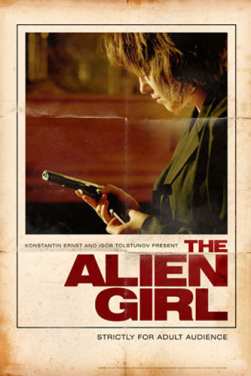
399) The Alien Girl (2010)

399) The Alien Girl (2010 Dir: Anton Bormatov Date Released: December 2010 Date Seen: December 7, 2010 Rating: 2.75/5

Ug-lee, but in a curious kind of way, if that makes any sense. Dig that poster ("Strictly for adult audience," you see?). See my review for the New York Press.

398) True Grit (2010)

398) True Grit (2010) Dir: Joel Coen and Ethan Coen Date Released: December 2010 Date Seen: December 7, 2010 Rating: 3.25/5

Eh, after having read the novel, I don't see the need for a movie. Mostly because some books cannot be adapted. And that's because the nuance of certain books' narratives are meant to be digested as books. Portis's meta-narrative is no good as a movie. See my review for Wide Screen.

397) Alamar (2009)

397) Alamar (2009) Dir: Pedro Gonzalez-Rubio Date Released: July 2010 Date Seen: December 5, 2010 Rating: 3.25/5

Pretty fascinating at times. See my review for the New York Press.

396) White Material (2009)

396) White Material (2009) Dir: Claire Denis Date Released: November 2010 Date Seen: December 4, 2010 Rating: 3.5/5

Can't believe I never got around to writing about this one; coulda sworn I had. In any case, I loved the first 20 minutes or so, especially that masterfully cryptic first scene. but I remember losing my interest around the midway point and latching onto Christopher (I refuse to call Lord Raiden Christophe) Lambert and his craggy, craggy face. Lambert's performance confirmed my suspicion that pretty boy actors get a lot more interesting to look at as they age--poorly (Mickey Rourke, I can't stop looking at you). They also hopefully have learned how to act by that point, so they've got that going for them, too. But yeah, this was fine. No great shakes but kind of interesting. Still a Denis noob so my favorite of the four of hers I've seen is still Trouble Every Day. I think I'll try The Intruder next...

Sunday, May 1, 2011

394) The Chronicles of Narnia: Voyage of the Dawn Treader (2010)

394) The Chronicles of Narnia: Voyage of the Dawn Treader (2010) Dir: Michael Apted Date Released: December 2010 Date Seen: December 2, 2010 Rating: 1.75/5

Eh. Still kinda phlegmy at the point when I saw this. But still. Eh. See my review for Slant Magazine.

390) The Father of My Children (2009)

390) The Father of My Children (2009) Dir: Mia Hansen-Løve Date Released: May 2010 Date Seen: November 28, 2010 Rating: 4/5

It does live up to the hype and then some. I greatly prefer this to Summer Hours, he said as if that mattered. See my review for the New York Press.

389) The Next Three Days (2010)

389) The Next Three Days (2010) Dir: Paul Haggis Date Released: November 2010 Date Seen: November 28, 2010 Rating: 3/5

Surprise, surprise, a Haggis film that's kinda entertaining. Falls apart in the last act but when it's in heist and then chase mode, it's kinda fun. Wouldn't know how it compares to the original film though so it's probably not that great. But still: Haggis made an ok film! Weird, right?

Wednesday, April 20, 2011

RV!: The American (2010)

RV!: The American (2010) Dir: Anton Corbijn Date Released: September 2010 Date Seen: November 27, 2010 Rating: 4/5

Both of Anton Corbijn's films are about slippage and its opposite. If you can fault them with anything, it's with being too over-determined. I wouldn't however because that's why I love both The American and Control so much. They're both works about artists--and George Clooney's character in The American is an artist after a point --that can't necessarily be in control of their circumstances that are also both directed by an artist haunted by that same fruitless search for perfection. To follow that imperative slavishly is not an option, it's a necessity as The American's Jack Clarke (Clooney) says in hitman-ese: "I do what I'm good at." Because everybody thinks they know who Clarke is as soon as they see him and they don't. Because even he doesn't know. Clarke is not defined by what he does irregardless of how how much the film's narrative supports that idea.

Take for instance the film's presentation of Clarke's nationality: it's an amorphous identity, one that varies based on the context of his relationships. Once Clarke's fled to Italy, he encounters a culture that is alternately confused and adamant that they know exactly who he is. A local corrects Clarke when he clumsily describes himself as "Il Americano." "No, no," the man say. "L'Americano! L'Americano!" Being American is not a possessive title ("Il") but rather a singular identity ("Le"). Clarke does not embody every American but rather is the only American there. The Italians in The American don't know what an American is--it's simply beyond their collective knowledge. So they can only anticipate his actions based on what they know from pop history.

Pop culture and signifiers stand in for American-ness throughout The American. They're intentionally impossible to miss: Clarke orders an Americano coffee when he meets a contact at a local outdoor cafe, is greeted later by a radio blaring "Tu Vuo Fa L'Americano" and even looks on as a local store owner watches Once Upon a Time in America ("Sergio Leone," the shop-keeper proudly announces to Clarke. "Italiano."). These reflections of Clarke are being projected onto him and only make it easier for people to confuse him for what he does. That's the way Clarke likes it and so that's the deceptively indulgent way that Corbijn depicts him: as a composite character.

There is no fixed reference point that confirms that Clarke is who they think he is, no clear sense that any character actually knows empirically what they tell us they know or are who they they identify themselves as. Everything is in flux until Clarke latches onto something that suits his self-fashioned. For instance, pay attention to who speaks first and in what language during Clarke's talk with Fabio (Filippo Timi), a local Italian mechanic. Fabio can speak English but responds to Clarke in Italian. Clarke reciprocates by only speaking English until he makes the first move by speaking Italian outside of the garage. Even after their introductory remarks, neither man is relaxed. Only after a few more exchanges in their respective native tongues do they start to fluidly swap languages, going back and forth in English and Italian. It's as if being inside the garage, surrounded by Fabio's tools--tools that Clarke examines, mind you--allows Clarke to tentatively accept the idea of making a professional bond.

Clarke does not follow through on that decision because something about Fabio doesn't sit well with him, something he doesn't understand until his walk in the park with Father Benedetto (Paolo Bonacelli). In this scene, it's implied that Fabio is an illegitimate son, one that cannot escape from the indifferent but watchful eye of Benedetto. Benedetto in that way brings out Clarke's need to live in the moment in order to flee his past: "You think you can escape history. You live for the present," Benedetto says playfully. "I try to, Father," Clarke replies grimly. 

The implication that Benedetto is not exempt from the urge to be unburdened by his past establishes a number of things. Firstly, it proves that that behavior is not a uniquely American trait, as he posited earlier. Benedetto does after all confess to Clark that he's not sure if he's the one that sired Fabio: "I don't remember, signor. It was many years ago." The drive towards ahistoricity, flux and an untethered identity is part of the human condition according to Clarke and it's a behavior that Benedetto only serves to confirm. When Clarke grunts that, "All men are sinners, Benedetto adds that, "Those that seek peace have much sinning in their history."

Clarke's crisis always was, in that sense, a spiritual one. Physical sensations like his initially purely sexual relationship with Clara, Violante Placido's prostitute, are tempting but deceptive, a concept that sort of confirms Clarke's philosophy of life but only to a point. Clarke's state of mind is entirely of the minute so by investing in the immediacy of Clarke's self-determined present, Corbijn also confirms Benedetto's claim that his life is "hell'ish. Take the nightmarish repetition of shots and images in the film. It starts off benignly enough, like when we see the cobble stone steps of the town during the day, then later by night or how his exercise routine varies day by day. But then we're reminded of why that repetition of visual cues is a sign of Clarke's instability. He fears that history is repeating itself, like when Clara finds a bullet and says "Maybe the hunters are here." Clarke fears that the hunters in question are the same ones that left footprints in the snow in the film's opening sequence. When a butterfly flits by at the end of The American, it is and it isn't a facile confirmation of Clara's pet name for Clarke ("Mr. Farfalle"). The symbol is dead and its Clarke's belief in it that killed it.

Monday, April 18, 2011

387) You Will Meet a Tall Dark Stranger (2010)

387) You Will Meet a Tall Dark Stranger (2010) Dir: Woody Allen Date Released: September 2010 Date Seen: November 26, 2010 Rating: 3.5/5

I was pleasantly surprised by how much I enjoyed this. In terms of its broad beats, it's just more of the same of Woody's recent resigned but wan recent dramedies. But his empathetic dialogue frequently impressed me and the narrative's criss-crossing scenario is frequently immersive in spite of Woody's continued ill-advised use of voiceover narration and Josh Brolin's half-baked performance. Gives me hope for Midnight in Paris...which hopefully I'll get to see at Cannes! Yeaaaaaah.